Applying Modern Deep Learning in Autify
A practical guide to applying modern deep learning and pre-trained NLP models in production software and product workflows.
- Visual testing
- Segmentation
- Locator tuning
- Genetic algos
- HTML model
- ~45% acc.
- Discovery
- RL
Deep Learning is at the forefront of modern AI. It is now powering applications that were considered impossible with previous techniques of software engineering. Almost every product is being empowered by techniques from the field. Autify is no exception. We have applied deep learning to multiple aspects of the product. So to share some of the progress, here are some of the upcoming use cases being powered by deep learning.
Deep Learning at Autify
From visual testing engines to intelligent test discovery, deep learning was being applied to real product problems in test automation rather than just theoretical demos.
Visual Testing Engine
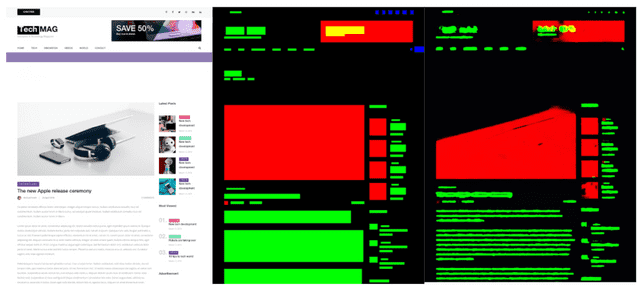
Visual Testing engine is a testing module to visually compare screenshots of different versions of the same web page and find different types of differences. Inspired by Adobe’s FRED, we implement a semantic segmentation model that classifies different regions based on their appearance on the screenshot. The goal is to have a meaningful representation of web screenshots which then can be used to parse out each component and compare them across different versions. This module will be integrated into our upcoming visual testing platform, which will allow users to test their web applications visually.
Visual Regression Detection
The semantic segmentation model identifies and compares meaningful regions of web screenshots so visual changes can be reviewed at the component level.
- Semantic segmentation
- Screenshot analysis
- Component comparison
Improving Feature Locator
Feature locator generator is one of the core components of our product which performs self-healing of recorded tests across multiple versions of a web application. One of the methods using which it does self-healing is to assign different weights to different features. Early iterations of this engine used human-tuned feature weights, which worked very well but multiple cases are usually found which cause problems.
Since we are optimizing an entire node.js application, we cannot use gradient-based methods from machine learning. Thus we use genetic algorithms to dynamically tune these parameters such that it solves a wider number of problems than a human weight tuner. You should be able to see the results of this improved version in upcoming iterations.
From Human-Tuned to AI-Optimized
- Before: manually tuned feature weights worked well but missed edge cases.
- After: genetic algorithms dynamically tune parameters across a wider range of self-healing cases.
Deep HTML Representation
HTML is a very powerful and expressive language and the entire web infrastructure is built upon it. However, it is not very friendly to work with HTML in a deep learning context. Here graph neural networks come for the rescue!
In order to calculate useful embeddings of HTML nodes, we extract a lot of numeric and categorical features which include dynamic information computed from selenium (i.e. locations) as well as static information e.g. attributes.
With this information, we were able to successfully classify HTML tags from other features with a validation accuracy of ~45% on our internal dataset of popular websites. We compared its results with a traditional linear model which performed poorly because of a lack of structural information. (Bear in mind that, HTML has a very unequal distribution of classes e.g. a huge number of divs, so we did use classification weight for balanced results).
We also utilized modern tools like mlflow and optuna to perform experiment tracking as well as hyperparameter optimization like the selection of activation function, the number of layers and capacity of the network, etc. This helps us find better models with fewer compute requirements.
Graph Neural Networks for HTML
- Raw HTML and DOM structure are converted into numeric and categorical node features.
- Selenium-derived dynamic information is combined with static attributes.
- The graph model reached about 45% validation accuracy on an imbalanced internal dataset and outperformed a linear baseline.
- MLflow and Optuna supported experiment tracking and hyperparameter optimization.
Intelligent Test Discovery
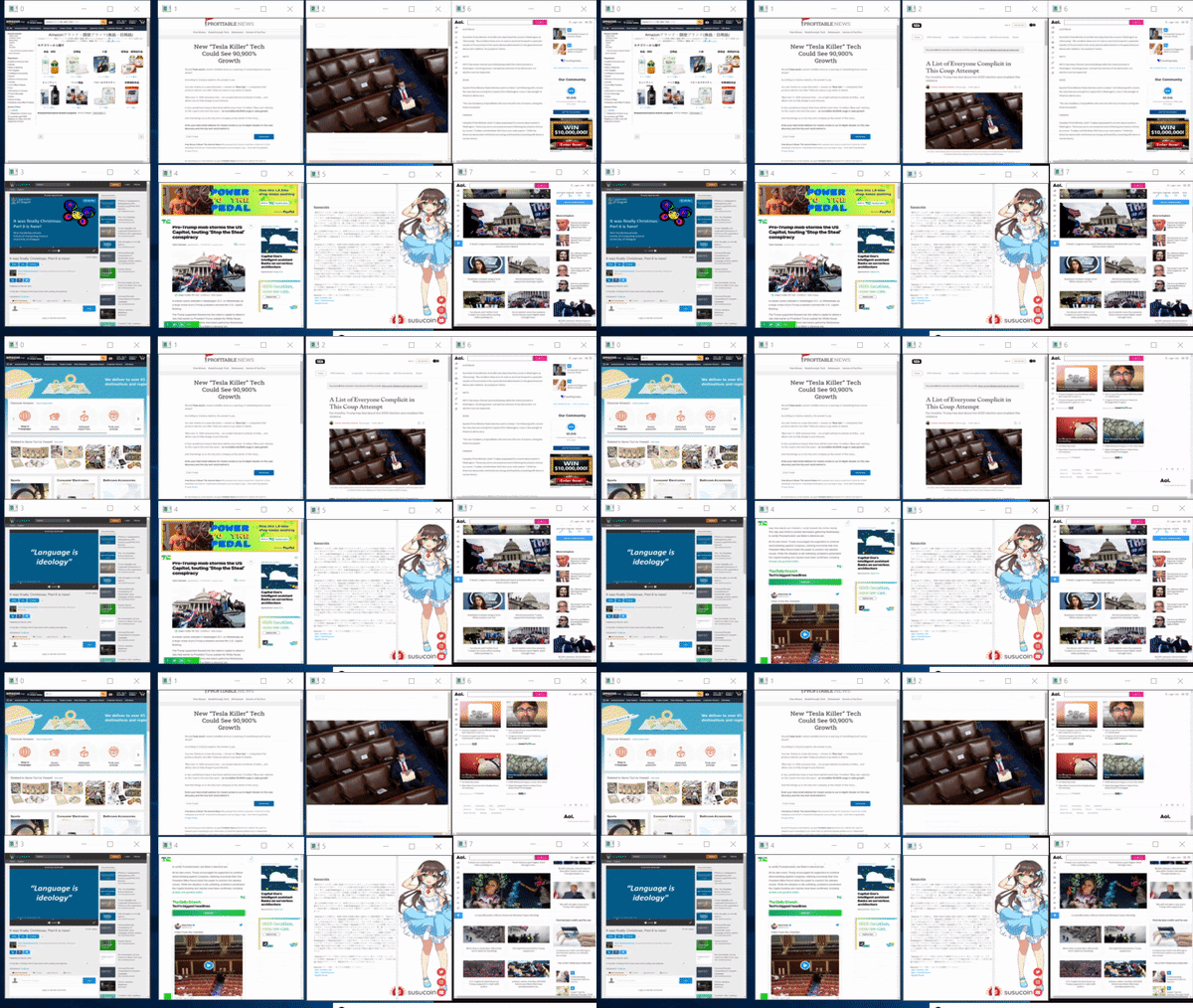
The primary function of Autify is to help users record and maintain tests for their web applications. But what if we could automate the process of recording test cases. Yes, with modern reinforcement learning, it is possible to automatically generate test scenarios of a web application. This is one of the very useful upcoming features of Autify.
Reinforcement Learning in Action
The agent learns to navigate through web application states, discovering potential test scenarios without manual recording.
Final Thoughts
In the article, we have shown some of the very promising research projects in Autify.
The Future of AI-Powered Testing
- Visual testing with semantic segmentation
- Genetic algorithm optimization for feature locators
- Graph neural networks for HTML representation
- Reinforcement learning for test discovery
Get in Touch
If you have any questions or queries, reach out to our social media @autifyHQ. Stay tuned for future updates!